17 November 2026•6 min read•Article
What Happens After a Laboratory Result? How SampleHub Turns Water Sampling Data into Action
Receiving a laboratory result is an important milestone in any water sampling programme. But it isn't the end of the process. In many ways, it's where the most important work begins.
For estates managers, water hygiene specialists and compliance teams, the challenge isn't simply collecting samples and receiving results. It's understanding what those results mean, deciding whether action is required and ensuring the appropriate next steps are completed.
When you're managing sampling across multiple locations, buildings or contractors, this process can become increasingly complicated.
That's why our October Product Desk is focusing on a simple but important question:
What happens after a laboratory result arrives?
We'll explore how SampleHub uses site-specific rules to interpret laboratory results, schedule follow-up activities and help teams maintain a clear, auditable record of their actions.
In a traditional water sampling programme, results often arrive through laboratory portals, emails or downloaded reports.
Someone then needs to review the information, compare it against the relevant action levels and determine whether further activity is required.
That might involve arranging another sample, notifying a responsible person, instructing a contractor or initiating remedial work.
Each stage introduces opportunities for delays, miscommunication or administrative errors.
Consider an organisation managing water sampling across dozens of buildings. Different locations may have different sampling requirements, risk profiles, responsibilities and escalation procedures.
Without a consistent process, teams can find themselves relying on spreadsheets, email chains and manual reminders to keep everything moving.
The problem isn't necessarily a lack of information. It's the difficulty of turning that information into coordinated, timely action.
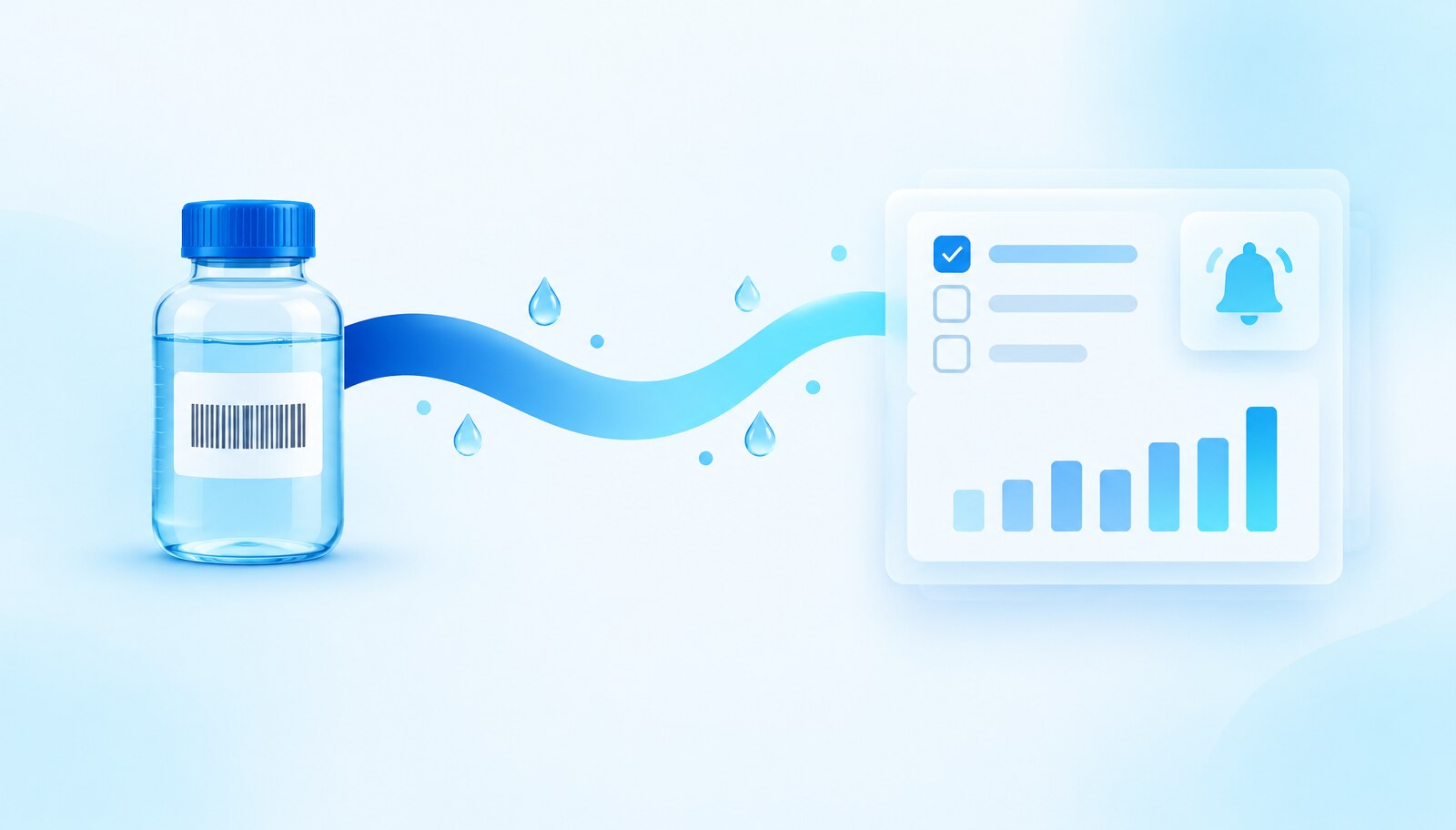
SampleHub is designed to connect laboratory results with the next steps in the water sampling process.
Rather than treating each result as an isolated piece of information, the platform can evaluate it against predefined rules tailored to the requirements of an individual site.
These rules can take account of factors such as sample type, previous results and defined action levels.
When a laboratory result is entered or imported into SampleHub, the system can assess it against the configured criteria and identify whether further attention is required.
This creates a more structured approach to result interpretation.
Instead of relying entirely on someone remembering which thresholds apply to which location, the relevant logic is built into the workflow.
Importantly, the rules must reflect the organisation's agreed procedures and be appropriately reviewed before use.
Automation supports consistent decision-making, but it doesn't replace professional judgement or the responsibilities of the people managing water safety.
Imagine a facilities team responsible for water sampling across a large estate.
A routine sample is collected from a designated outlet and sent to the laboratory for analysis.
When the result arrives, it indicates that a predefined action level has been exceeded.
What happens next?
In a manual process, the result might be forwarded by email, added to a spreadsheet and passed to someone responsible for arranging further investigation.
With SampleHub, the workflow can be more structured.
This is an illustrative example rather than a prescribed response to a particular test result. Actual decisions must follow the relevant risk assessment, water safety plan and approved procedures.
The benefit is a clearer connection between the laboratory result and the activity that follows.
Not every building, sampling location or result should be treated in exactly the same way.
A healthcare environment may have different requirements from a commercial office or educational facility. Even within the same estate, sampling locations may have different risk characteristics and operational considerations.
That's why flexibility is essential.
SampleHub allows organisations to configure rules around their own sampling requirements, rather than forcing every site into an identical process.
This can help teams standardise the way results are managed while retaining the flexibility needed for individual locations.
For organisations overseeing multiple properties, that combination of consistency and site-level control can be particularly valuable.
It also helps reduce dependence on informal knowledge held by individual team members.
Automating a workflow can save significant administrative effort, but only when the underlying rules are appropriate.
Before enabling automated result interpretation and follow-up scheduling, teams should review several important areas.
These checks are essential to making automation a dependable part of a wider water safety management programme.
One of the biggest advantages of connecting laboratory results with follow-up activities is improved visibility.
Instead of searching across emails, spreadsheets and separate contractor records, teams can manage sampling information and associated actions within a central platform.
For compliance managers, this supports clearer oversight of outstanding activities and sampling status.
For operational teams, it helps clarify what needs to happen next and who is responsible.
For organisations preparing for audits or internal reviews, maintaining a traceable record of results and actions can also make it easier to demonstrate how the sampling programme has been managed.
Ultimately, effective compliance management depends on more than collecting evidence. It requires a reliable process for responding to that evidence.
This October, we're taking a closer look at the journey from laboratory result to follow-up action.
Our SampleHub Product Desk walkthrough will demonstrate a worked example of result interpretation, show how site-specific rules can trigger subsequent activities and explore the checks teams should complete before relying on an automated workflow.
Whether you're managing sampling at a single facility or coordinating programmes across a large estate, it's an opportunity to see how a more connected approach could simplify day-to-day administration.
Because the real value of a laboratory result isn't just knowing what it says. It's knowing what happens next.
Want to see how it works? Contact us for a SampleHub walkthrough.
Find out how SampleHub keeps every sample, result and follow-up action in one clear place.